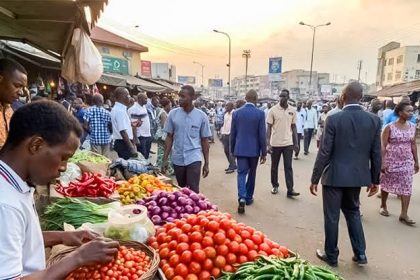


AKURE, Nigeria — Food prices in Nigeria 2026 keep rising despite slower inflation. (Western Nigeria).
Headline inflation was put at 15.93% by the National Bureau of Statistics on May 17, 2006 at 7:30 a.m. Food inflation in particular stands at 16.96% on a year-on-year basis.
For most homes in the western part of Nigeria, this means expensive garri, beans, tomatoes and palm oil. Conversely, farmers in Ogun, Oyo and Ondo states estimate that prices might fall by October.
Report explains how food prices stay high in Nigeria 2026 using town-level data in Osun, Ekiti and Ondo.
1. Food Prices in Nigeria 2026: Latest NBS Data [Updated]
According to NBS, the headline inflation recorded at 15.93% in May 2026 as against 15.69% in April 2026. This represents the third consecutive increase on a month on month basis. Inflation for food however was up by 16.96% from 16.68% in April 2026.
Adding food and non-alcoholic drinks resulted in 6.38 percentage points in the overall inflation. Restaurants, transport, and housing followed. On a month-on-month basis, food inflation was 2.98%, down from 3.63% in April.
“The rate of increase in the average price level was lower than the rate in April 2026,” NBS said. However, year-on-year prices still climb.
2. Food Prices in Nigeria 2026: 4 Reasons They Still Rise
Experts list four factors keeping food prices in Nigeria 2026 high across Western Nigeria:
- Insecurity and reduced farm output: The US-Iran war raised fertiliser costs. Insecurity in tomato states cut supply. “Demand has outweighed supply because farmers cannot access their farms,” said Popoola Gomna, pepper market leader in Osun.
- Transport and forex costs: Food and beverage firms depend on imported inputs. The naira averaged ₦1,370/$ in May, up 0.64% from April. “The worsening foreign exchange situation has significantly increased the cost of doing business,” said Oyibo Jimoh, FOBTOB President.
- High production costs: Energy, ginger, and palm oil rose. A paint bucket of ginger sold for ₦40,000–₦46,000 in Lagos. Ekiti recorded the highest palm oil at ₦2,819.09 per bottle.
- Global shocks: In May, the FAO Food Price Index climbed 1.6 percent to 130.7, a third-straight rise. A increase in energy prices was fueled by heightened concerns in the Middle East.
As a result, food prices in Nigeria 2026 stay high even as headline inflation slows.
Don’t Miss: Cost of Living in Lagos 2026: Why Your Salary No Longer Lasts 2 Weeks
3. Food Prices in Nigeria 2026: Town-Level Prices in Western Nigeria [Table]
NBS April 2026 data shows sharp differences across states. Western Nigeria states appear below:
| State | Item | Price ₦ | Note |
|---|---|---|---|
| Oyo | 1kg brown beans | 1,938.91 | Highest in April 2026 |
| Ekiti | 1 bottle palm oil | 2,819.09 | Highest in April 2026 |
| South-West | 1kg fresh ginger | 6,812.92 | Highest zone average |
| Osun | Cost of healthy diet | 1,809 | Per day, April 2026 |
| Ondo | Cost of healthy diet | 1,736 | Per day, April 2026 |
In contrast, Plateau had 1kg tomatoes at ₦730.48. Taraba had beans at ₦750. Therefore, location shapes what families pay in Western Nigeria.
4. Food Prices in Nigeria 2026: Which States Are Cheapest and Costliest?
In Adamawa the highest price increase for food in May 2026 was 29.62% followed by Kwara 28.47% and Rivers 28.40%. Prices deflated in Borno at -6.53%.
However, overall inflation tells another story. Osun recorded 5.25% in May, making it Nigeria’s most affordable state. Kano was 9.85% and Kaduna 10.38%. “Lower housing costs, improved infrastructure, and business-friendly reforms have strengthened its position,” Legit.ng reported on Osun.
In the Western part of Nigeria, there was a food inflation of 23.1 in Ondo, 21.0 in Oyo, 18.8 in Osun and 17.2 in Ekiti in May. Traders in Osogbo, Akure and Ado-Ekiti, however complain that there has been some ease in the market. “The current price of a bag of rice dropped to N57,000 compared with N65,000 in October,” said Aderemi Ganiyu, rice seller in Alekuwodo Market, Osogbo.
5. Food Prices in Nigeria 2026: When Will Tomatoes, Pepper, Ginger Drop?
Farmers say relief is coming. The Tomatoes and Orchard Producers Association of Nigeria expects prices to crash in October 2026. “By October, we will be harvesting tomatoes from Jos, Kaduna, Kano, Gombe and down south-west in Ogun, Ondo, Oyo, and part of Lagos,” said TOOPAN President Oyeleke Bola.
Small-scale farmers in South-West now produce 20–30 tonnes per hectare. As supply rises, food prices in Nigeria 2026 may ease. The Agriculture Minister said food prices already dropped by 50% nationwide due to interventions.
Still, insecurity and input costs remain. “If farmers can safely return to their farms and production improves, supply will increase and prices may stabilise,” said a Lagos ginger trader.
For now, households in Western Nigeria use POS, Okada, and bulk buying to cope. Okada to farms in Ondo LGAs costs ₦500. Market women in Ado-Ekiti share garri and amala to cut costs.
Read More: Rice Now ₦82k: Western Nigeria Food Prices Today 2026