
UK Economy Slows to 0.4% in Second Quarter as Political Unrest and Middle East War Bite
Growth decelerated to a standstill last year but, in a remarkable turnaround for a struggling British economy, forecasters predicted on Monday the economy grew marginally stronger as the new PM Andy Burnham takes up residence in Downing Street.
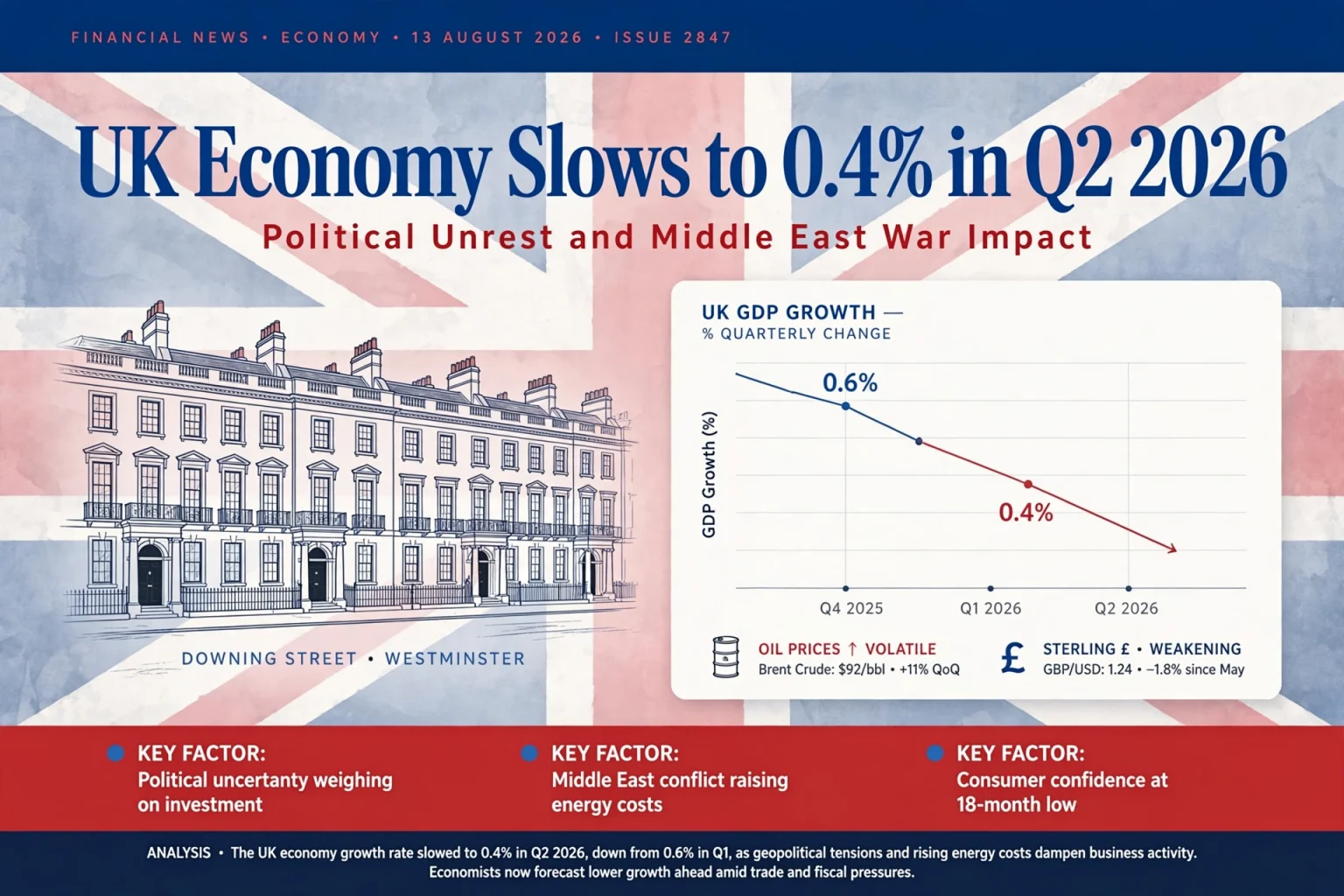
British GDP grew by 0.4 percent in the April to June quarter, after growing by 0.6 percent in the first quarter.
“Despite continued turmoil within our own domestic political situation, and of course we must never overlook the impacts stemming from the US-Iran war, growth has slowed from the strong base seen at the beginning of 2026.” Said Liz McKeown of ONS.
What Slowed UK Economy?
The slowdown is linked to two major factors:
1. Political Unrest at Home: The resignation of Keir Starmer from the UK’s Prime Minister position in late June of the previous year was followed by a replacement by Andy Burnham approximately a month later, as the Labour Party government lost ground in opinion polls to the far-right party Reform UK. The period of prolonged political instability caused ambiguity in the business world.
Economists at Capital Economics said the data “is not a bad welcome gift for incoming PM Andy Burnham” but warned that growth could flatline in Q2.
2. US-Iran War and Energy Costs: Struggling already with elevated inflation, millions of Britons have seen their situation worsen after the US-Iran war sent energy costs soaring.
The country’s new finance minister John Healey said: “I know people are worried about the impact of the conflict in the Middle East on their cost of living, which has been too high for too long, and it has added pressure on British businesses”.
Don’t Miss: Why Lagos Still Leads as Nigeria’s Business Capital in 2026
Breakdown of Q2 Growth
The most recent GDP statistics recorded services sector output to rise 0.5 percent in the second quarter of this year and construction output expanded but production was static.
“Services were once again the main driver of growth,” McKeown added.
The second quarter had a strong finish, growing 0.3 percent in June after zero expansion in May and a slight dip in April.
Interestingly, ONS cited the recent football World Cup as a reason for increase in turnover in June by businesses in industries such as manufacture of alcohol, wholesale, food and beverage serving, publishing, television production and advertising.
Cost of Living Pressure
But business leaders are worried. British Chambers of Commerce research manager Stuart Morrison said “the headline figures shouldn’t disguise the cocktail of cost pressures choking long-term business growth”.
He said Healey’s first budget, due October 28, “must be a game changer for stronger, sustainable growth,” adding that Britain needed “measures that boost trade, investment and productivity”.
Burnham has so far concentrated on easing the cost of living for households, with tax on their electricity bills set to be removed this winter. The Bank of England recently warned that British inflation was set to rise as the Mideast war keeps energy prices high.
Inflation cooled slightly to 2.6% in June from 2.8% in May, but economists say it offers only temporary relief as energy prices remain high due to Iran war.
Forecasters expect annual UK GDP to expand in range of 0.9% to 1.1% in 2026, down from 1.4% last year, as political and energy shocks continue to bite.
What do you think about Andy Burnham’s ability to fix UK economy? Comment below and share this foreign news update.
FAQ S:
Q: Why did UK economy slow in Q2 2026?
A: Due to political unrest after Starmer resignation and US-Iran war raising energy costs.
Q: Who is new UK PM?
A: Andy Burnham.
Read More: Western Nigeria Governors Performance 2026: Ranking of 6 Southwest Governors